
Crabbing For Fun
Tale From The Locker by John Lijoi
(adapted for the web)
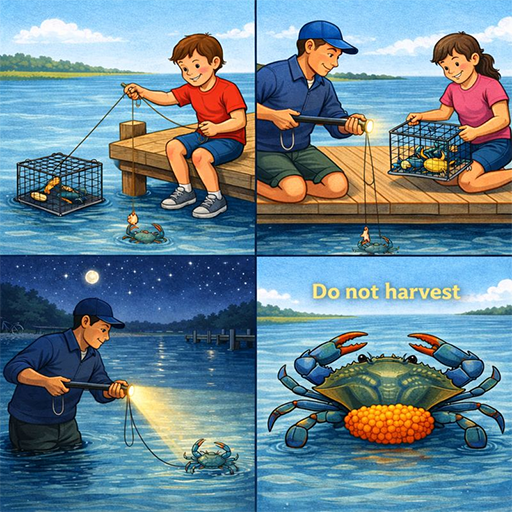
Dock Crabbing in Long Island
I’ve been crabbing for as long as I can remember. As a little boy growing up on Long Island, New York, weekends often meant family trips to the local docks. We’d bait foldable crab traps with chicken legs — or sometimes just tie a piece of chicken to a string — then “reel” crabs in slowly and scoop them up with a net.
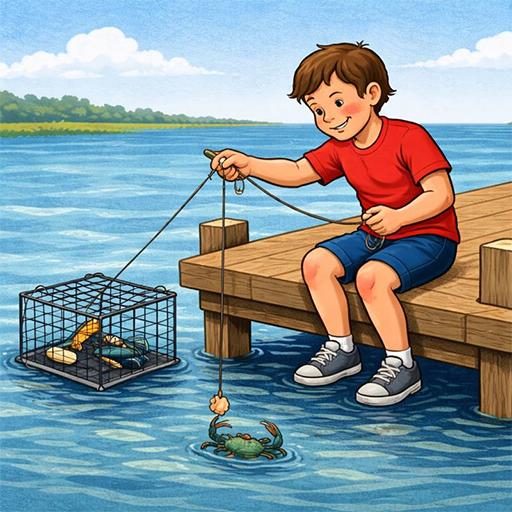
Those dockside outings usually ended in a feast: crab salad, or crabs simmered in spaghetti sauce. It became a summer ritual — simple, messy, and perfect.
Night Crabbing in Brooklyn
In college, I’d drive two hours at night to go crabbing with my Uncle Frank during low tide in Brooklyn. This wasn’t dock crabbing — we waded waist-deep through bays armed with a strong flashlight and a long-handled net.
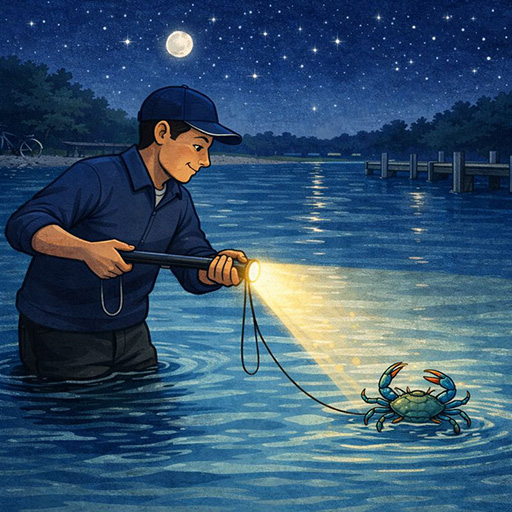
The path through the bay was never straight. We’d pick our way around whatever the tide revealed: bicycles, shopping carts, and once even a car engine. We’d sweep the light across the water and scoop up the elusive blue claw crab. Spotting a soft-shell crab swimming near the surface was rare — and always worth a hoot.
Passing It On
One of my favorite memories is from our summer camping trips to the Jersey Shore. One year, my 21-year-old daughter (living in New Jersey at the time) called and asked if I’d take her crabbing on our next trip — she hadn’t been in a long time. Of course I obliged.
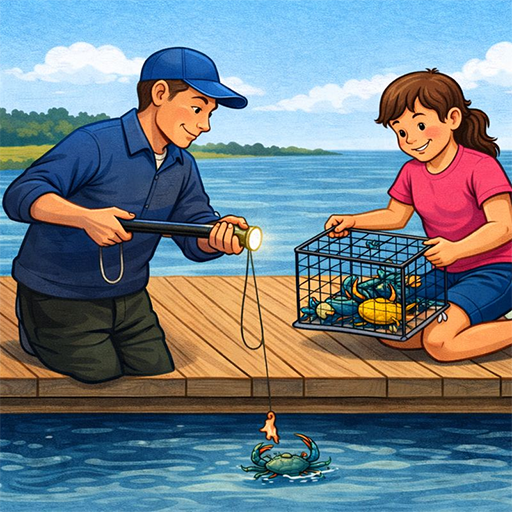
Some traditions just belong in the “repeat forever” category.
Crabbing in Southeast Georgia
Here in Southeast Georgia, there’s an abundance of blue claw crabs in our local waters. You’ll often see commercial crab pot buoys scattered throughout local rivers and creeks, and crabbing is possible year-round.
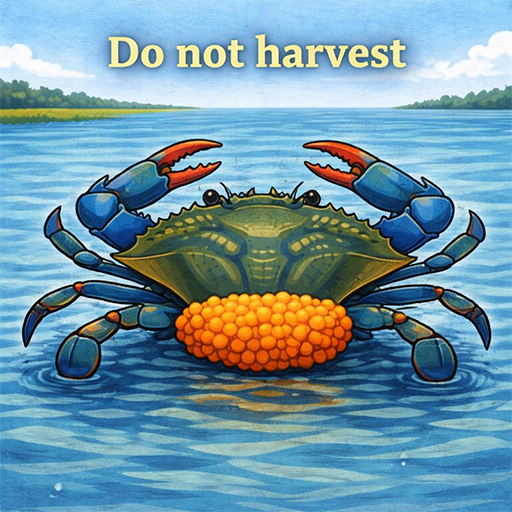
Mating season runs from May through October. Pregnant females can be identified by the large “sponge” of eggs attached to their abdomen. It is illegal to harvest female crabs with eggs — they control future generations of crabs.
Crabs tend to “fill out” after the mating season and are often larger and more plentiful in the fall months. In Georgia, if you’re older than 16, you generally need a fishing license and a Saltwater Information Program (SIP) permit to recreationally crab (unless you are on your own private property).
Legal harvest size is at least 5 inches point-to-point. Recreational harvest is up to 2 bushels per day.
Blue Claw Life Cycle
The average life span of a blue claw crab is about 3–4 years. When it’s time to grow, a crab swells with water and splits the old shell along the back edge. Then it wriggles out through the opening.
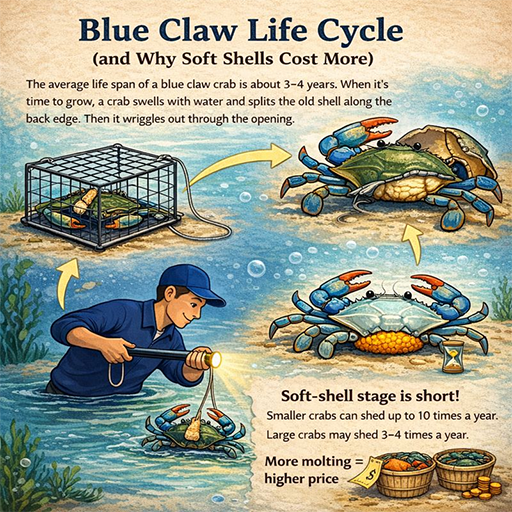
The new shell has already formed and is roughly a third larger — but it’s soft at first. A crab can remain truly “soft” for only a short window before the shell hardens. Large crabs may shed 3–4 times a year, while smaller crabs can shed up to 10 times a year. That’s a big part of why soft shell crabs are more expensive than hard-shell crabs.
Gear, Bait, and Techniques
There are plenty of opinions about the “best time” to go crabbing, but many people aim for two hours before and two hours after low tide. With less water and steady movement, crabs can pick up scent and find bait more easily.
Crabs are scavengers and will eat almost anything. Popular baits include chicken (often the cheapest parts) and fish heads. Since scent matters, it’s smart to refresh bait once or twice during a day of crabbing.
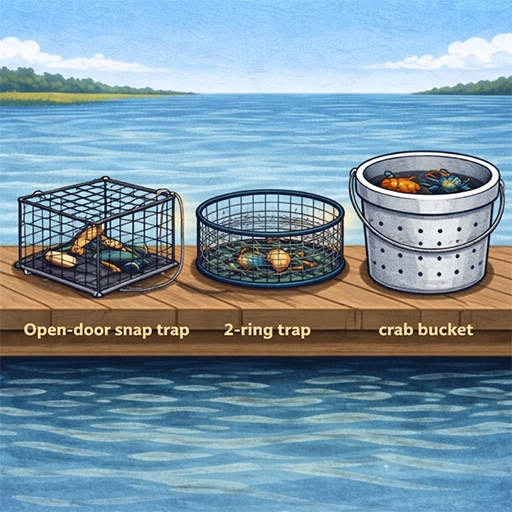
Helpful gear includes: a double-ring crab net or crab lines with weights and clips, snap traps (triangle or rectangle), a long-handled net for scooping, and a five-gallon bucket for your catch. I drilled holes in my bucket and attached a rope so I could occasionally wet the crabs.
If crabs are left submerged, they can drown. If they get too dry, they’ll die — both are avoidable with basic care.
Handling tip: grab the swimming flippers from behind and the crab can’t pinch you. Another safe method is… have your partner do it.
Handling and Cooking
DO NOT COOK DEAD CRABS.
As soon as a crab dies, it begins to spoil quickly and can become toxic. If a crab has died, dispose of it immediately.
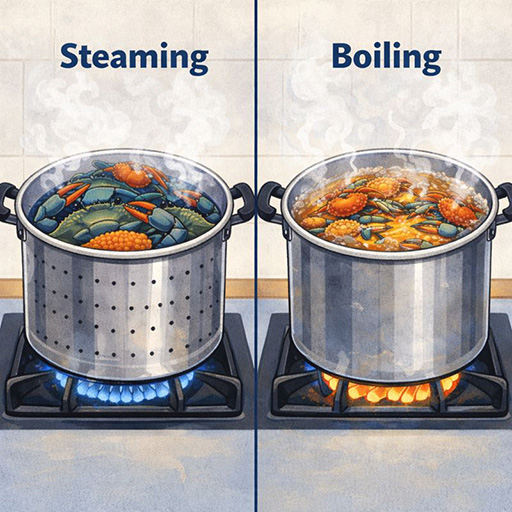
To cook live crabs, you can either steam or boil them. Many people add seasoning like Old Bay, but I prefer steaming without spices. Steaming helps separate the meat from the shell, making the “picking” easier.
A nutcracker is one of the best tools for opening crabs. First remove the carapace (top shell) by lifting one edge. Discard the lungs and the green/yellow innards — they don’t taste good and can be sour. Then enjoy the claw meat and lump meat from the body.
Happy crabbing!