
Cumberland River Adventures
Tale From The Locker by Charles Wilsdorf
(adapted for the web)

Childhood on the Cumberland River
When I was a young boy, my family lived on a small bluff overlooking the Cumberland River in Nashville, Tennessee. Our river frontage opened onto a wide, sandy beach — the kind of place a kid could spend entire days without ever getting bored.
I remember sitting on that beach watching barges slide past. When their wakes finally reached shore, they rolled in like slow-motion ocean waves. That was my cue. I’d walk downstream, wade into the water, and collect the boats those waves had floated off the bank.
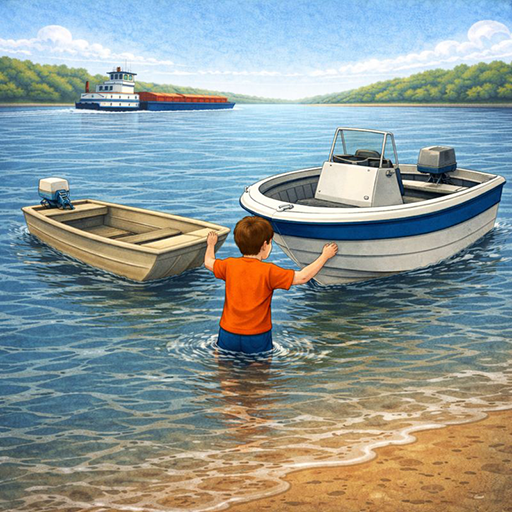
It was simple. Peaceful. Perfect.
Back to the River — With Boats
After I lost my father, my mother moved us away — worried about me being alone near the river while she was at work. I missed my dad...and I missed that river.
Nearly ten years later, my mother’s job took us back to the Cumberland — farther downstream this time. She worked for a family-owned water heater manufacturer, and management had a few unusual perks:
- Use of a houseboat built from water-heater tanks
- Use of the company-owned 1959 Owens 15-foot outboard runabout
As a 14-year-old living on the river, I had access to both whenever I wanted.
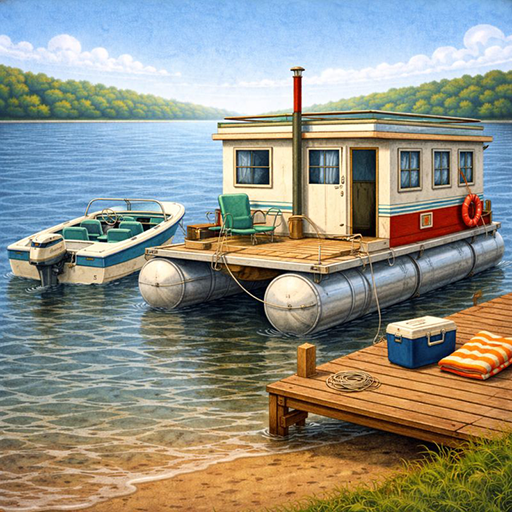
Life was very, very good.
Big Wakes and Bad Decisions
My friends and I practically lived on the river. We waterskied during the day and anchored or docked at the houseboat in the evenings. We even skied through the massive wakes thrown by passing barges — some towering more than 15 feet high.
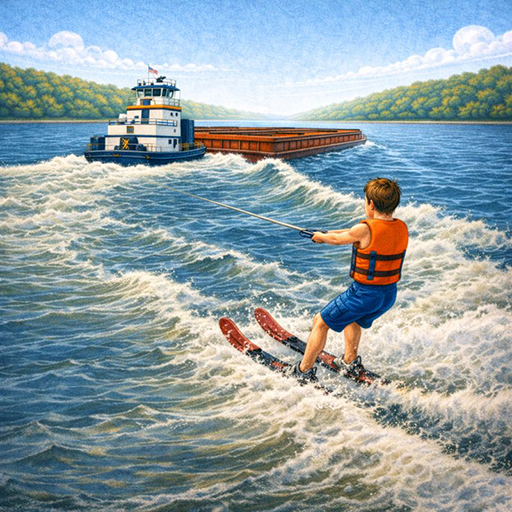
Sometimes the skier would disappear completely behind a wave, the tow rope vanishing beneath the water. One afternoon, while towing a skier through a tug’s wake, I realized something was wrong. I was closing on the tug’s stern much faster than expected.
Then it hit me. The tug was backing down — its propellers pushing water forward instead of slowing. I immediately turned around to pick up my skier — and then my stomach dropped. I remembered seeing another small boat earlier, crossing ahead of us.
Oh no.
Two Men in the Water
I headed upriver and soon spotted two men in the water. It was their boat I’d seen earlier. Their engine had stalled.
When they couldn’t restart it and realized the barge couldn’t stop — or maneuver around them — they jumped overboard and swam for their lives. My friends and I pulled both men aboard and brought them to safety.
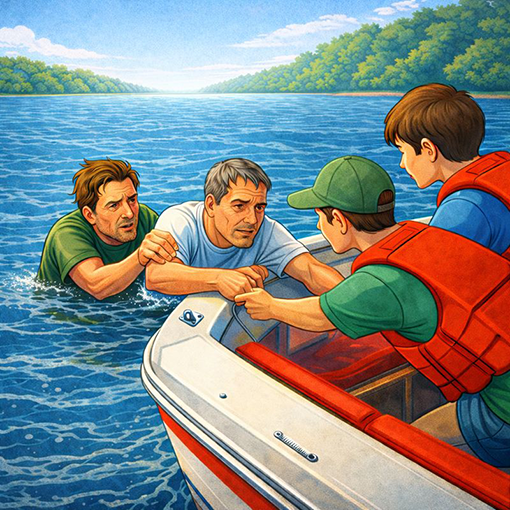
The tug captain saw what had happened and motioned for me to come alongside. There were a lot of questions. By then, the two men were claiming they’d lost valuable tools and large sums of cash when their boat sank.
Names, addresses, and locations were exchanged. I told the captain where our houseboat would be docked.
Salvage After Sunset
About an hour after sunset, a man jumped aboard our houseboat and knocked on the door. He was a contract diver working for the barge company. He asked if I could help him locate the sunken boat the next morning — and said I’d be compensated. I was in.
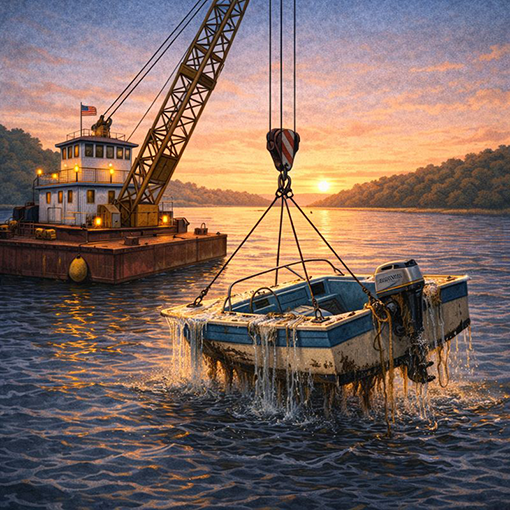
Using two boats, we dragged a line across the river bottom, snagging everything imaginable. Each time, the diver would disappear underwater… then surface. “No boat yet.” After hours of searching, we finally found it — the boat.
The diver attached lifting lines, and the tug’s crane brought the boat to the surface. Aside from a missing windshield and motor cover, t he damage was surprisingly minor. The barge’s bow had simply pushed the boat under.
No tools. No wallets. No cash.
Rich at Fourteen
That night, the diver handed me a check for $175. It was more money than I had ever seen in my life. At 14 years old, I felt rich.
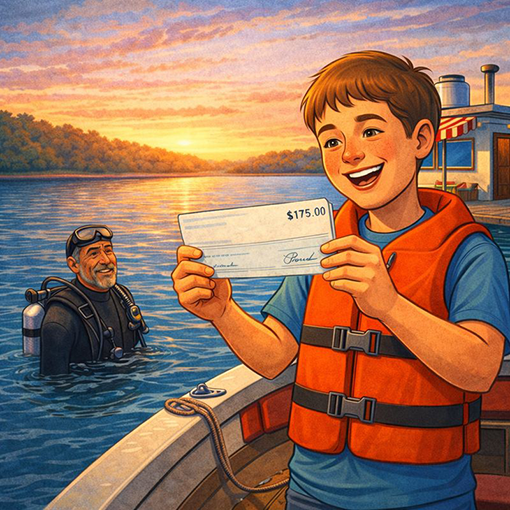
Later, I learned the barge company had settled with the two men. While the barge did cause the boat to sink, I’ve always believed the situation was more complicated than that and navigation rules agree.
The Rule That Matters
The U.S. Coast Guard Navigation Rules make something very clear:
- Vessels are categorized by maneuverability
- A vessel restricted in its ability to maneuver (like a tug and barge) is generally the stand-on vessel (except when encountering a vessel not under command)
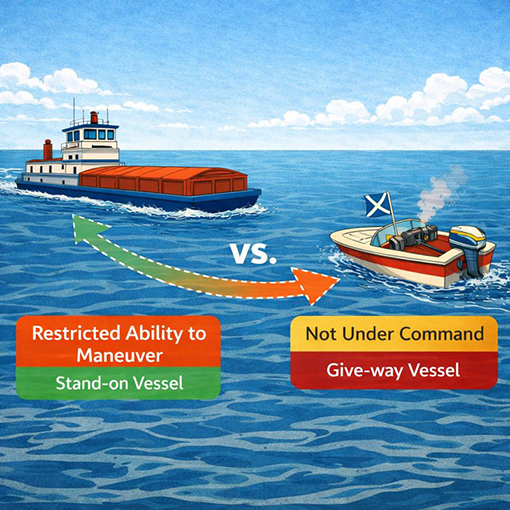
In this case, the tug's momentum couldn’t stop. The small boat engine stalled and couldn’t move.
Understanding both conditions matters — and sometimes, rules collide in real life.
Epilogue: Full Circle
A few years later, I bought that little Owens 15-foot outboard runabout from my mother’s company. Before I’d even finished paying for it, the company loaned it to a customer — who promptly sank it at the dock.
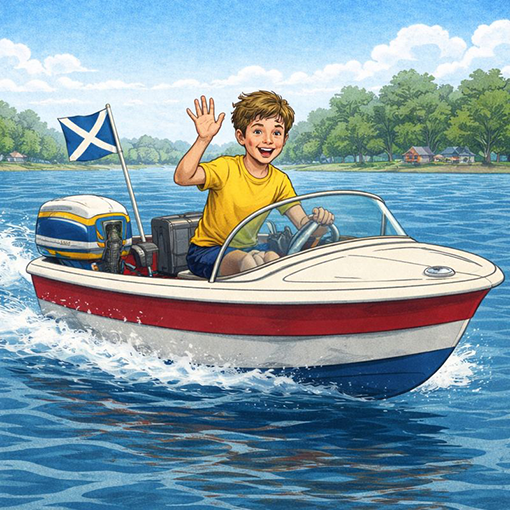
They returned the boat a few days later… along with a check for my original purchase price minus one dollar. After a day of repairs, I was back on the Cumberland River, driving that same little boat — and with a little more money in my pocket.
Some lessons stick.