It Started With a Boat
Tale From The Locker by Rick & Sharon Hindery
(adapted for the web)

The Boat That Started It All
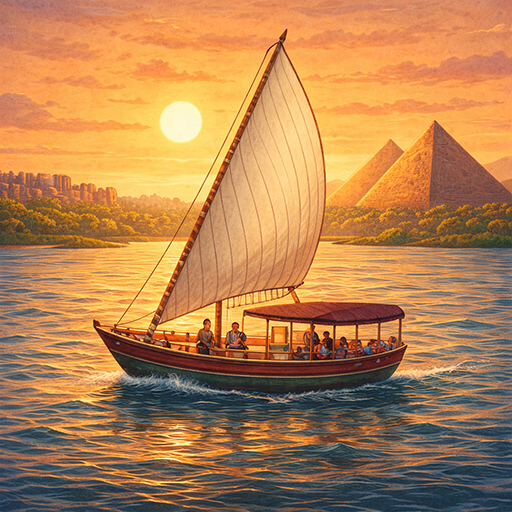
It started with a picture of a felucca, a traditional Egyptian sailing craft, on the cover of National Geographic Traveler. One look at that boat and seven decades of memories came rushing back.
I was nine years old, sitting with my parents, mesmerized by Charlton Heston and Yul Brynner in The Ten Commandments. A few years later, I stayed up late on Friday nights to watch Boris Karloff in The Mummy.
Egypt felt larger than life: the Great Sphinx, the pyramids, Antony and Cleopatra, Napoleon Bonaparte’s attempt to conquer Egypt, and the discovery of the Rosetta Stone. Sharon, my wife, and I were even two of the million people who visited the King Tut exhibit in Chicago in 1977.
Still, Egypt was never on our list — until that felucca made us think: Let’s go.
A Floating Palace on the Nile River
While the felucca sparked the idea, it was the SS Misr — a historic, luxury, steam-powered Nile River cruise ship — that sealed the deal.
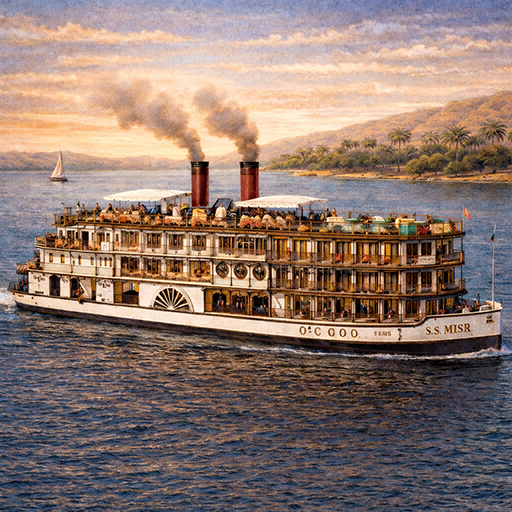
The SS Misr ( Arabic for the "Kingdom of Egypt" ) is one of only two steam vessels still sailing the Nile River. Built in 1918 by the British Royal Navy, it was later converted into a floating palace for Egypt ’s last king, Farouk, and restored to its royal vintage glory in 2003.
With just 24 cabins (each with a private balcony) and a maximum of 48 passengers, a crew of 60 provided the kind of personalized service you don’t forget.
Cruising Up the Nile River
During our stay, we were the only Americans aboard. Among three Germans and a tour group of 24, we were treated like kings while we cruised gently up the Nile River from Luxor to Edfu to Aswan.

Each morning, our guide would pick us up for a day of visiting ancient sites. Afternoons were spent leisurely motoring on the Nile River and observing rural life along its lush green banks — the desert only a short distance away. Villages felt different from the chaos of Cairo — fewer cars, more donkey carts and horses.
Boats Everywhere
Life in Egypt centers around the Nile River. The river provides drinking water, irrigation for the fields, transportation, and food. Fodder for livestock is collected by boat from the river’s edge.

Overnight, we would raft up at docking — sometimes three ships deep — so we had to walk through the lobby of other ships when disembarking for a night tour.
Catch And Toss Commerce
Small boats would even tie up to ours while cruising. The merchants would holler, “Hello, hello!” and display their wares — blankets, robes, and more.

If you agreed on a price, they’d wrap it up and toss it to you… and you’d toss the payment back. Amazon Prime... Nile River edition .
Tombs, Temples, and Wonder
We spent a morning in the Valley of the Kings, entering several tombs — including King Tut's. Only King Tut’s mummy remains in the beautifully decorated tomb; the furnishings are in a museum in Cairo. We even took a plane to see the Abu Simbel temples.

In Cairo, we toured the pyramids, the Great Sphinx, various temples and tombs, Coptic Christian churches, and the Mosque of Muhammad Ali. We visited both the old Egyptian Museum and the new Grand Egyptian Museum — and the bazaar.
The Best Part
We spent our final night with a Cairo family in their home, learning how to make and share a typical meal with them. It was the high point of our trip.

Everyone we met was knowledgeable, passionate, interesting, and fun. We had an incredible time in Egypt on the Nile River.